Sampling
All organisms leave traces behind: skin cells, mucus, scales, invisible to the eye but rich in DNA. This environmental DNA, or eDNA, drifts through rivers, lakes, and streams long after the animal itself has moved on. A single liter of water can carry genetic traces from hundreds of species, turning an ordinary water sample into a rich source of biological information, no sighting, capture, or disturbance of the animals required.
Because it requires nothing more than a water sample, eDNA sampling is fast, cheap, and completely non-invasive, allowing dozens of sites to be surveyed in the time traditional methods would need for just one. This scalability is exactly what makes eDNA such a powerful complement to traditional fish surveys, extending monitoring to places and frequencies that were previously out of reach.
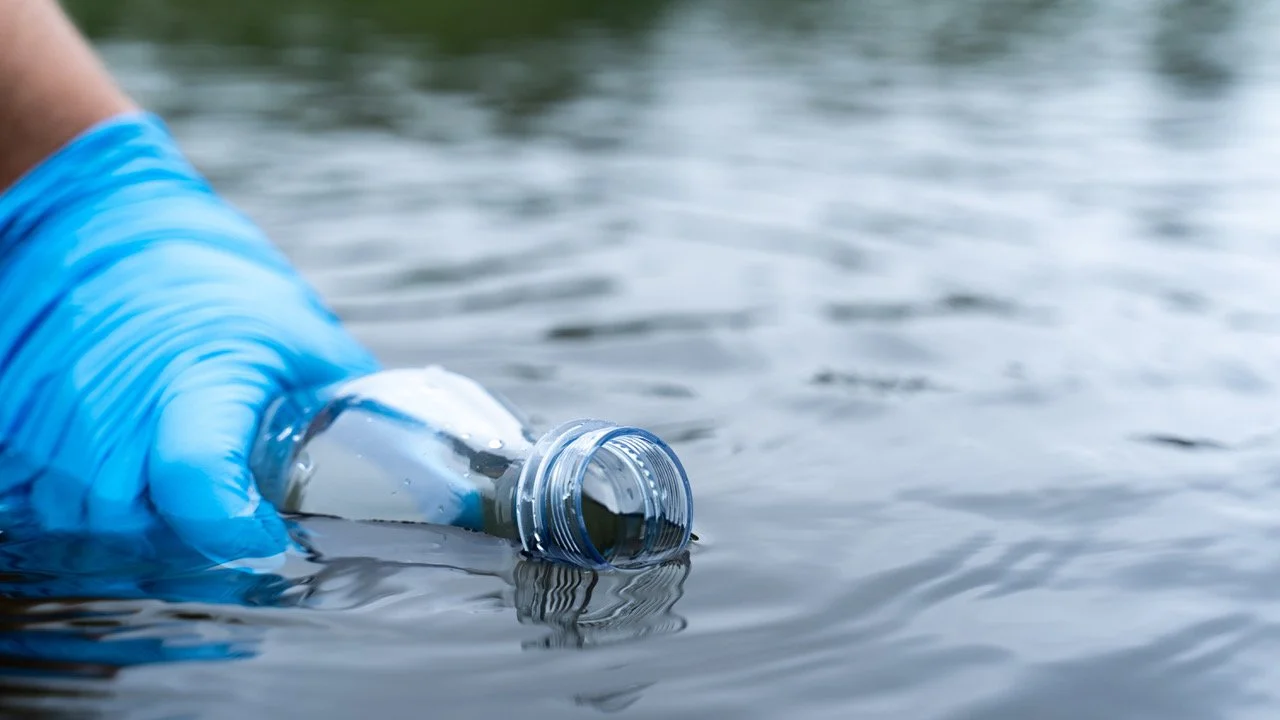
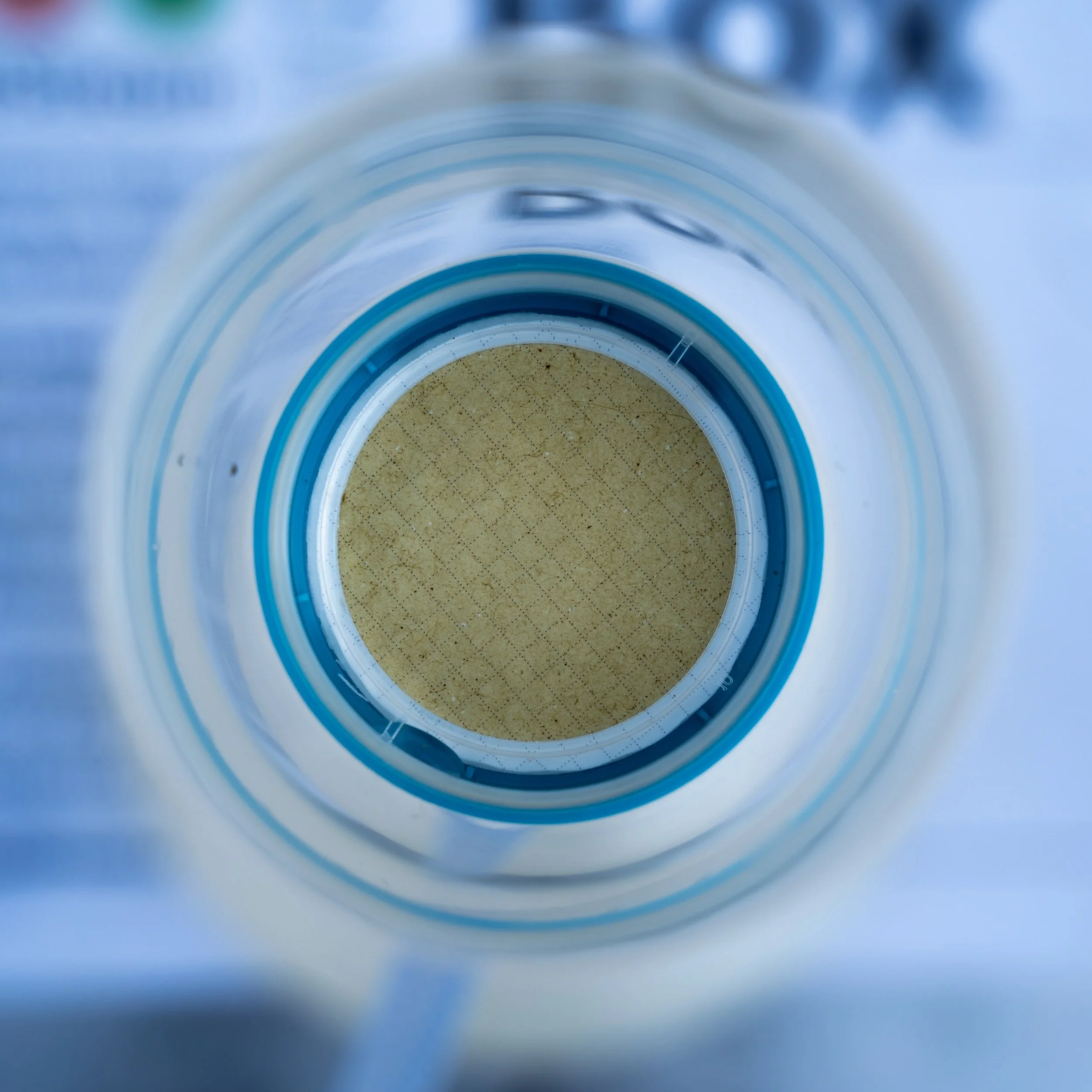
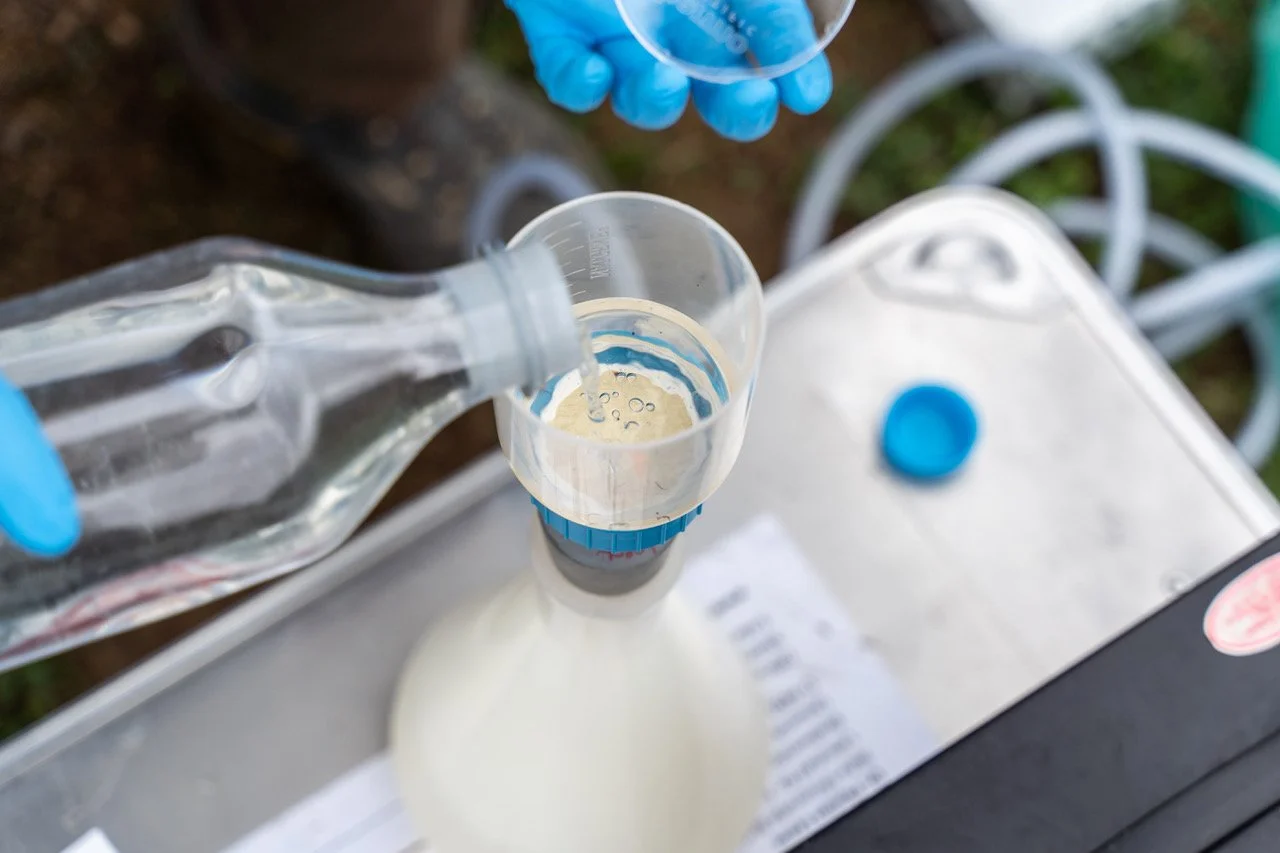
Collecting it is refreshingly simple: researchers scoop water directly from the river or lake, then pass it through a fine filter that captures the tiny particles carrying DNA, much like a coffee filter catches grounds. Samples are collected at carefully chosen sites, often the same locations used for long-term water-quality monitoring, and preserved immediately to stop the DNA from degrading before it reaches the lab.