Under Threat
First Signs of Decline
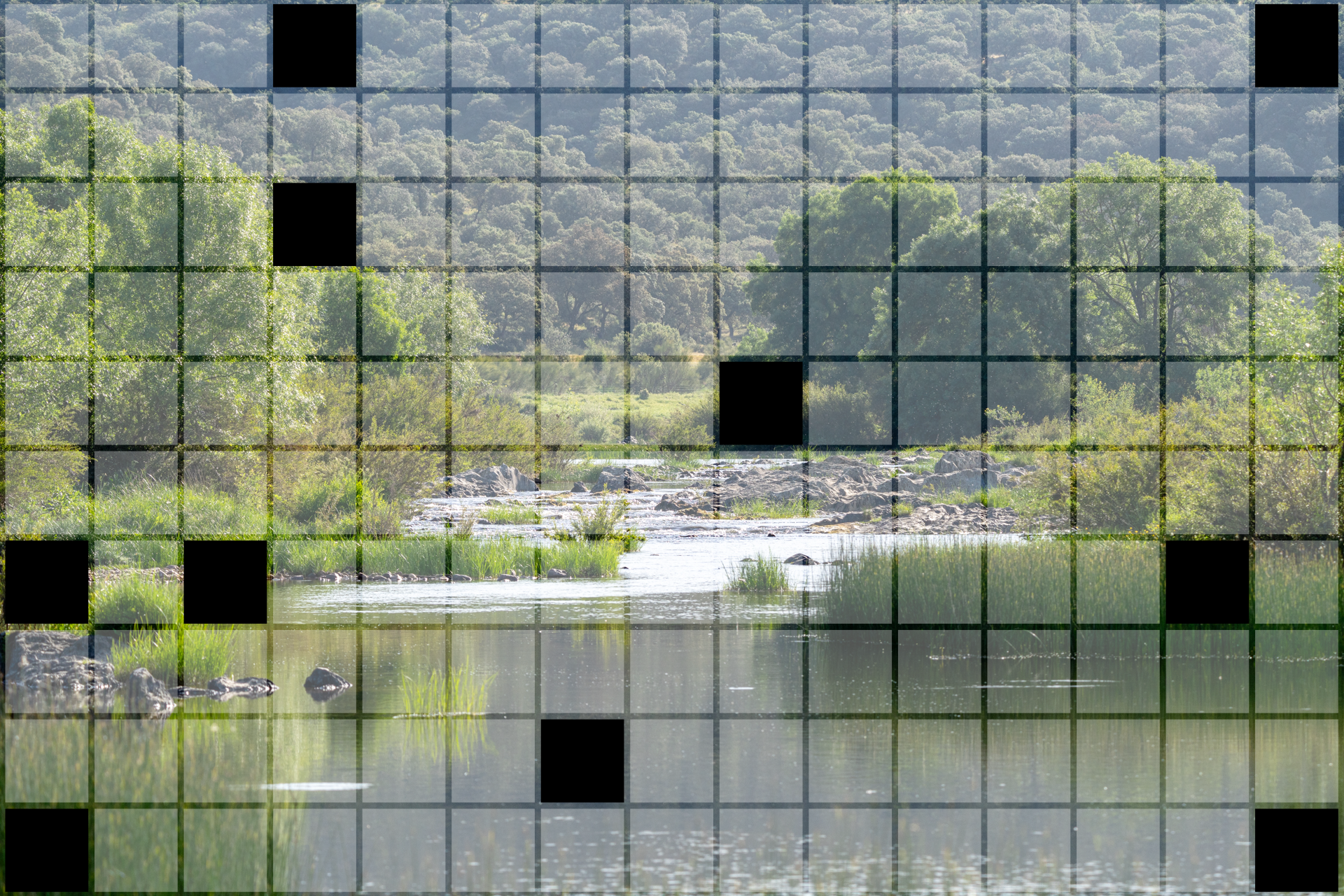
Dark patches begin to spread across the landscape, each one standing in for an element of biodiversity that has quietly disappeared: an amphibian population, a pollinator species, a fungal network working unseen underground. The river and forest remain broadly recognizable, so nothing here yet feels alarming, and a casual glance still reads the scene as healthy. That is precisely the danger of this stage. Losses accumulate piecemeal, each one small and locally insignificant enough to go unremarked, while the overall picture still looks, to most observers, essentially fine.
Unrecognizable Landscape
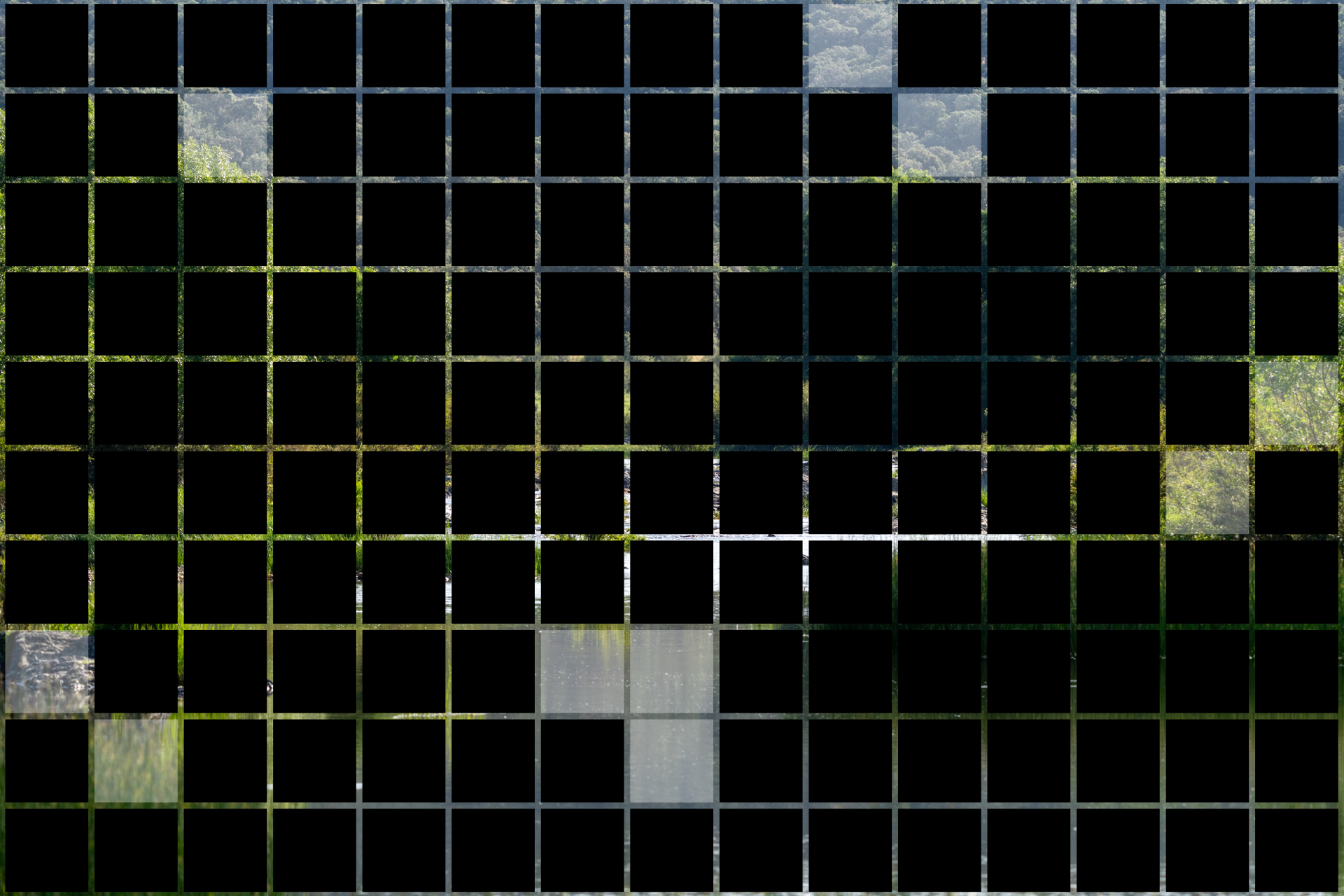
Almost nothing remains visible now. Without prior knowledge, no one encountering this scene could tell that a river ever flowed through a forest here at all. This is what unmonitored, unaddressed biodiversity loss ultimately looks like: not one dramatic collapse, but thousands of small, unnoticed disappearances quietly compounding into something wholly unrecognizable. Robust, continuous, long-term monitoring is what keeps this picture legible for as long as possible, catching the first dark boxes early, while there is still a river left to protect.
An Intact Ecosystem
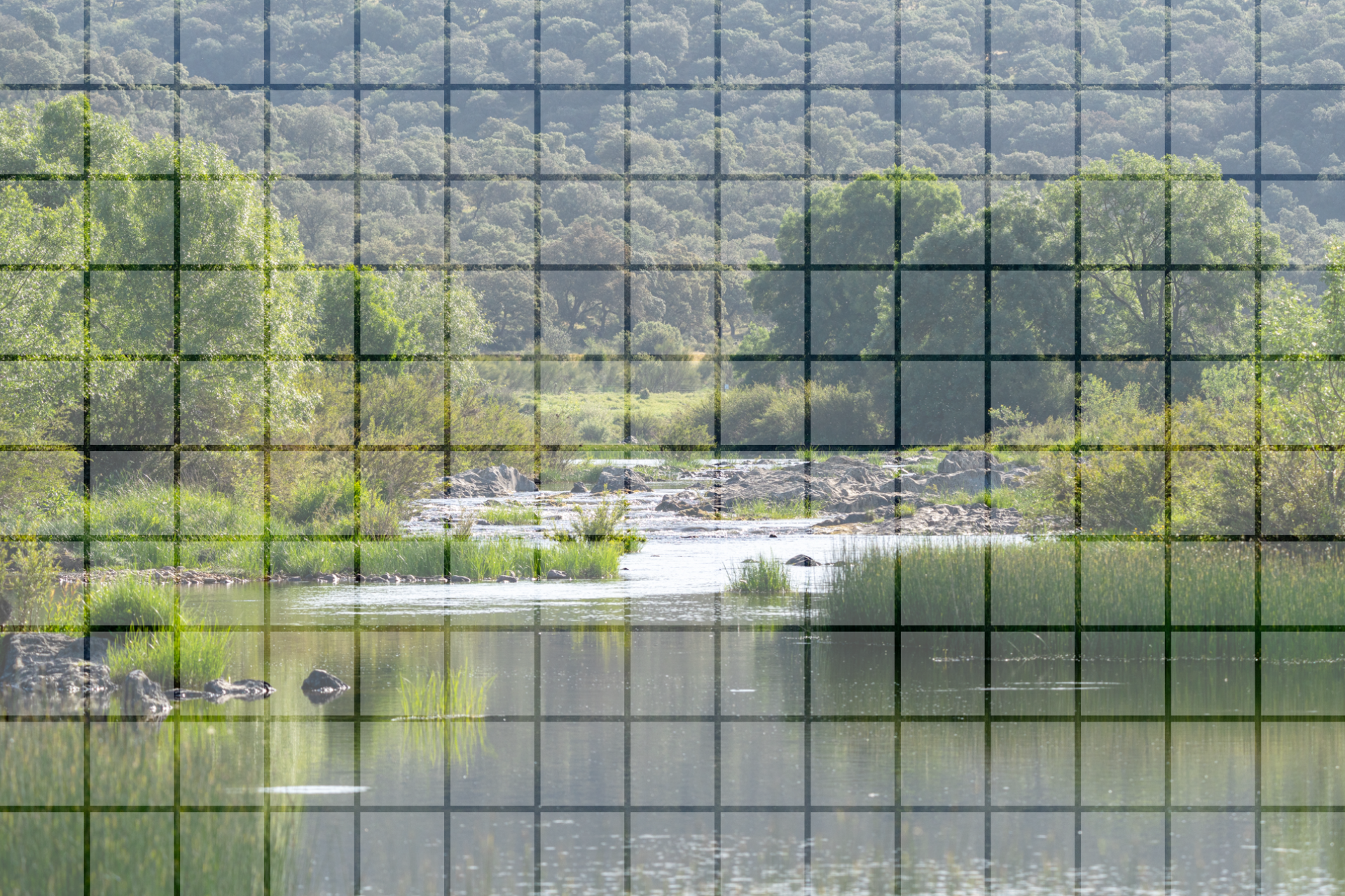
A river winds through an old-growth forest, its banks thick with plants, insects, birds, fish, and countless organisms too small for the eye to register. Every piece still seems to be in its place, and the scene reads as whole, healthy, untouched. Yet even here, losses have already begun: a population quietly thinning, a species slipping from one stretch of stream, an interaction breaking somewhere unseen. Biodiversity loss rarely announces itself. It starts exactly like this: visible, intact, and already changing beneath the surface, long before anyone notices
Blurring Baseline
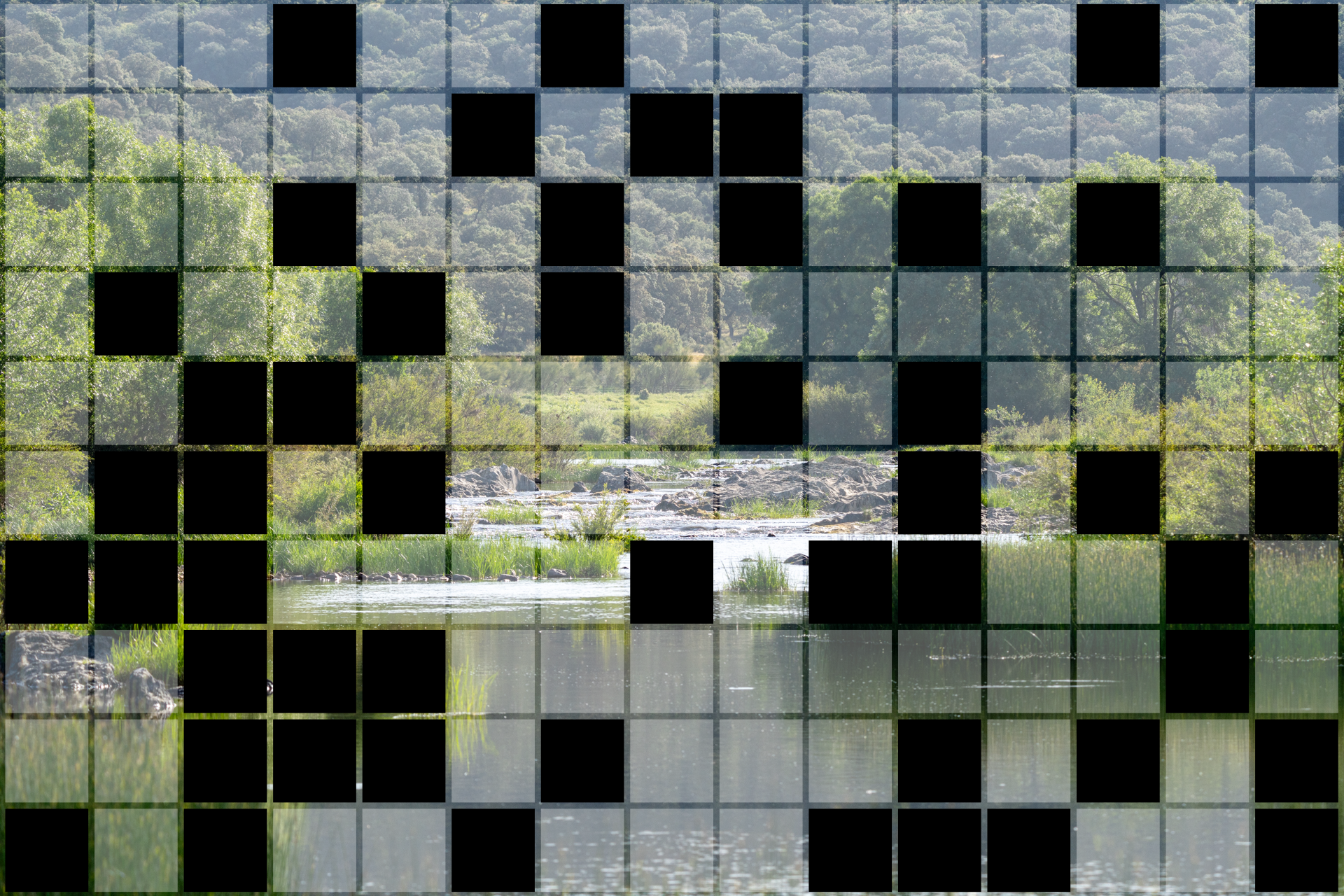
More of the scene has now gone dark, and the river's course is growing harder to trace. This is shifting baseline syndrome taking hold: as loss accumulates gradually, our reference point for what counts as "normal" quietly shifts along with it, so each new generation of observers accepts an already depleted landscape as the natural, unremarkable state. We stop noticing what is missing precisely because we no longer remember it was ever there, turning the loss itself increasingly invisible at the very moment it is accelerating fastest and mattering most.