BEAM
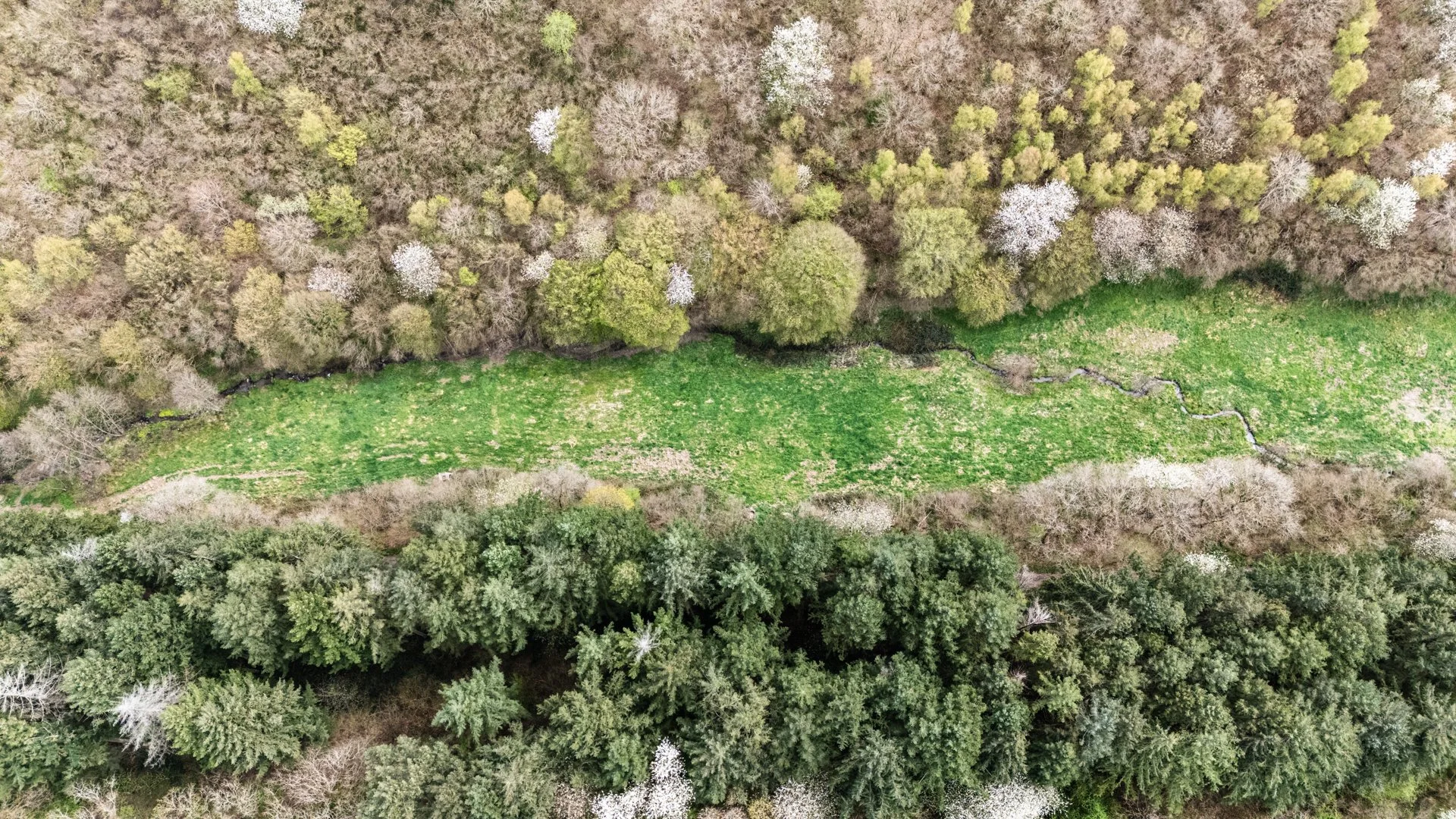
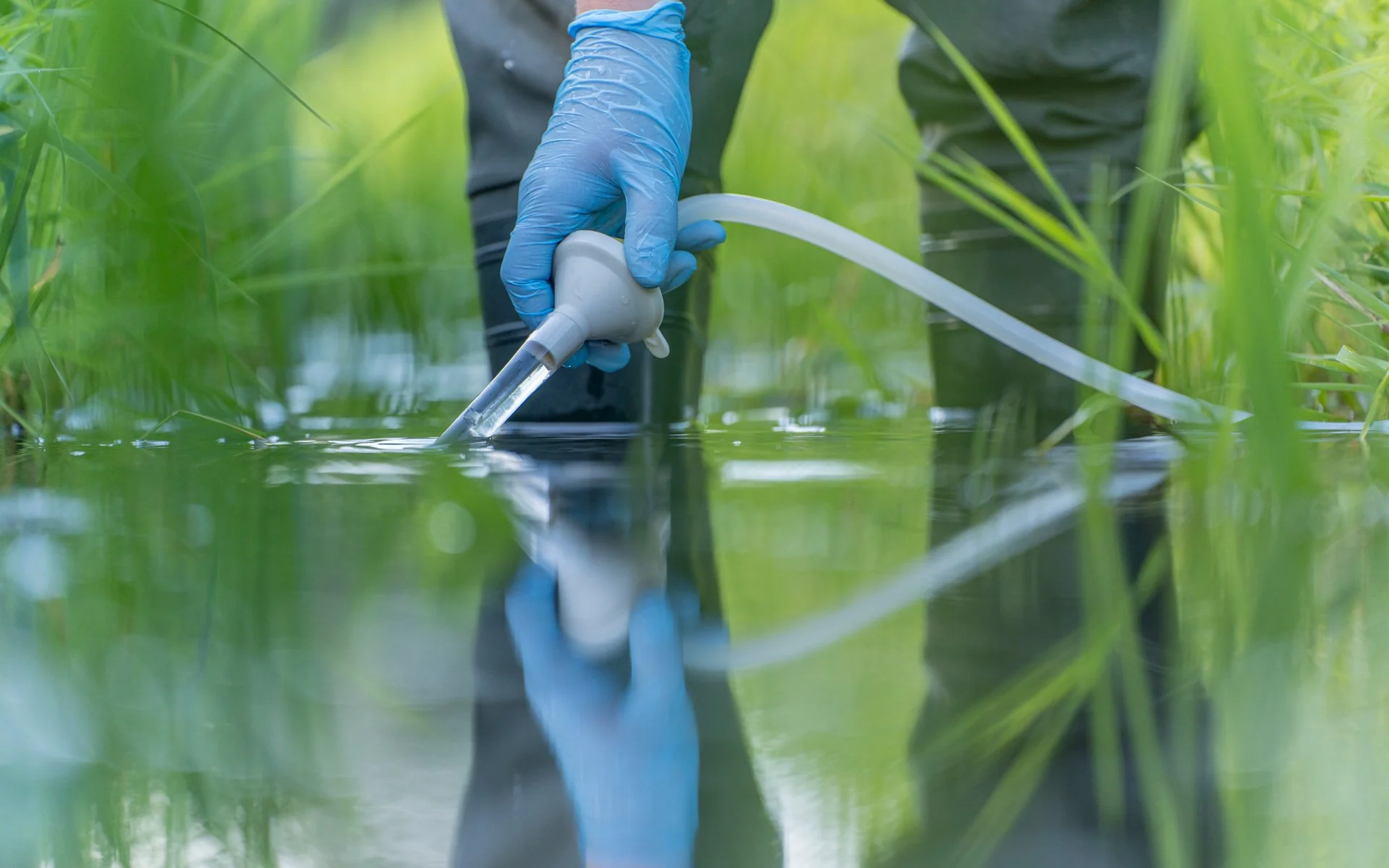
Between 2027 and 2031, the interdisciplinary research project BEAM sets out to fundamentally rethink how we monitor biodiversity. Rather than simply cataloguing which species are present, the project aims to develop tools that reveal how healthy, resilient, and connected populations really are, sustainably and without disturbing the animals themselves. Its key innovation lies in bringing together eDNA, epigenetics, population genetics, water chemistry, satellite data, and AI within a unified framework, capable of tracking abundance, age, stress, and connectivity within aquatic ecosystems from a simple water sample.
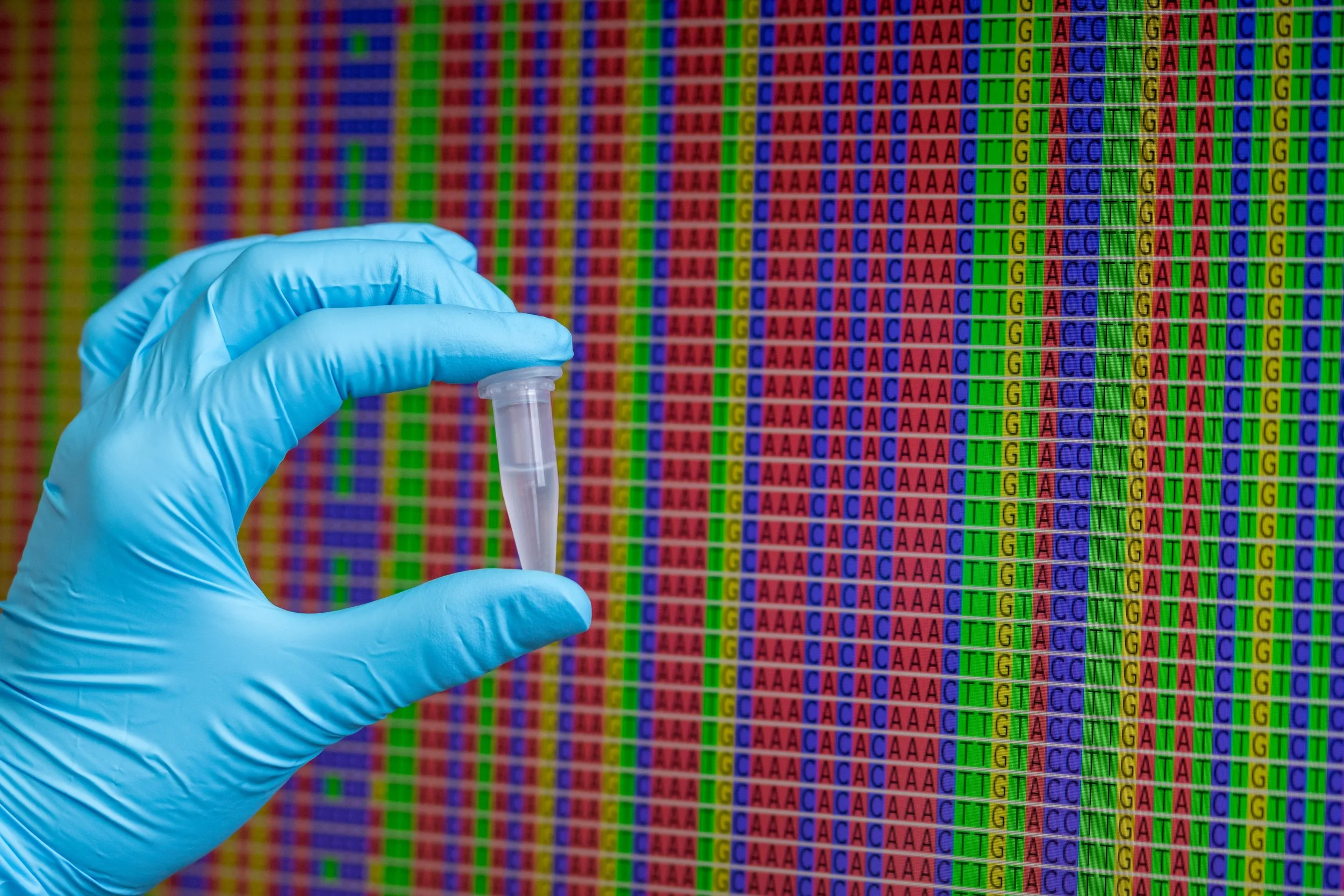
Beyond new scientific knowledge, BEAM will also expand practical, freely available software, building on existing tools like APSCALE and TaxonTableTools2 by adding population genetic and epigenetic analyses, and introducing entirely new applications such as EpiPrimerMiner and EDIX. Together, this work lays out a concrete blueprint for how biodiversity monitoring can become faster, more informative, and genuinely fit for the environmental and conservation challenges that lie ahead.
Funded by the Carl-Zeiss Nexus 2026 program, Project BEAM is organized into five interlocking work packages, spanning molecular biology, chemistry, hydrology, and computer science. Rather than progressing as isolated studies, these work packages are deliberately designed to feed into one another, sharing samples, sites, and data across disciplines so that findings in one area directly strengthen and inform the others. This close cooperation turns individual results into genuine cross-disciplinary insight, weaving separate strands of research into one coherent, integrated understanding of biodiversity.
Five Years - Five Work Packages


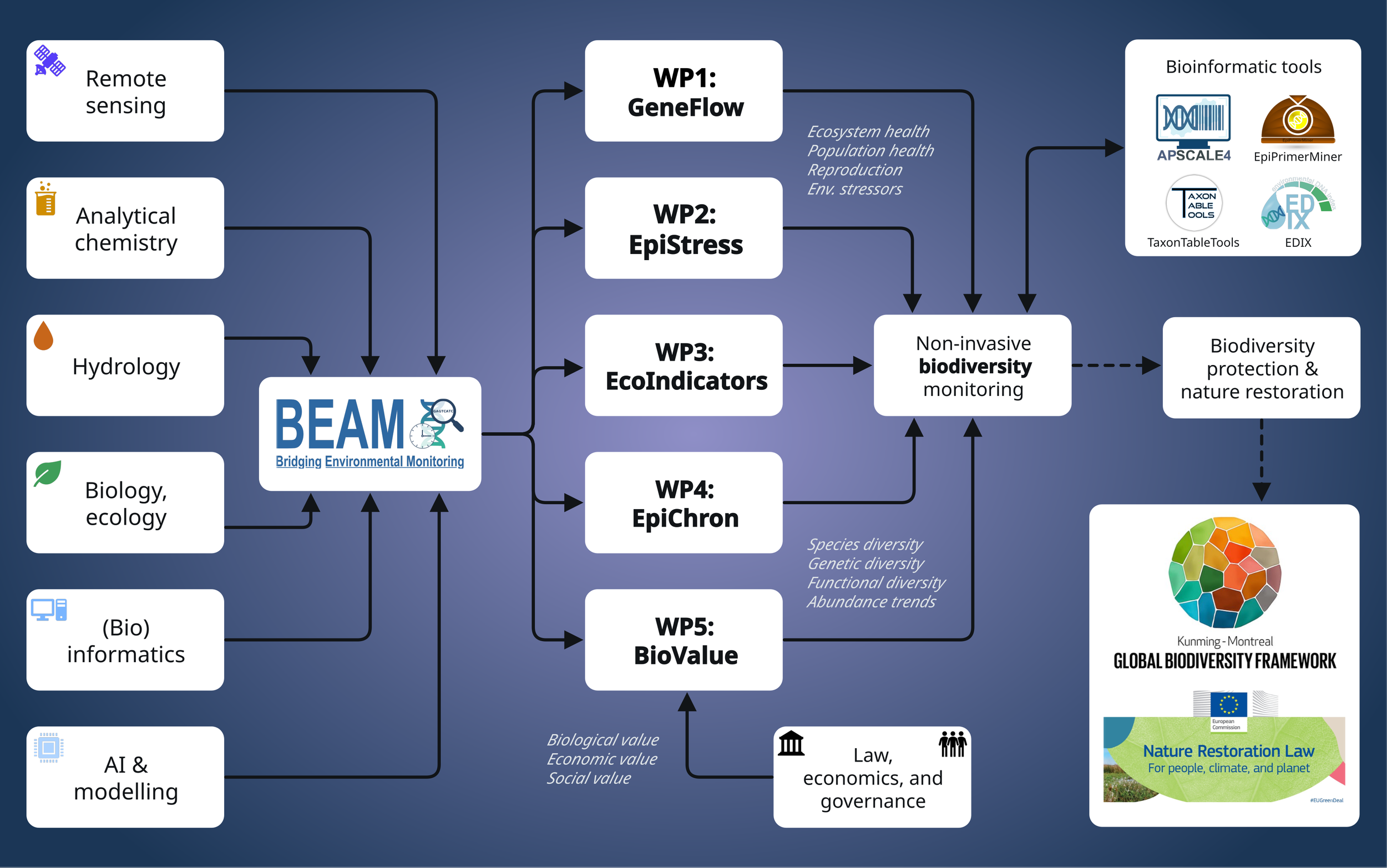
Project BEAM roadmap depicting the integration of four interdisciplinary PhD projects aimed at advancing non-invasive biodiversity monitoring to inform conservation strategies and nature restoration efforts.
Interdisciplinary Cooperation Partners
Biogeography (Trier University)
Prof. Dr. Henrik Krehenwinkel
Bioinformatics (Trier University)
Prof. Dr. Hans Recknagel
Environmental Specimen Bank (Trier University, Umweltbundesamt)
Dr. Isabelle Junk
Dr. Julian Hans
Jan Koschorreck
Public, International, and European Law (Trier University)
Prof. Dr. Birgit Peters
Entrepreneurship and Innovation Management (Trier University)
Prof. Dr. Jörn Block
Municipal and Environmental Economics (Trier University)
Prof. Dr. Georg Müller-Fürstenberger


Microbial Ecology (Trier University)
Prof. Dr. Lisa Voskuhl
Geoinformatics (Trier University)
Prof. Dr. David Frantz
Diatom Research (Botanical Garden and Botanical Museum, Freie Universität Berlin)
Dr. Jonas Zimmermann
Interdisciplinary environmental protection (Umweltcampus Birkenfeld)
Prof. Dr. Stefan Stoll
Biology and Geoscience (Université de Toulouse)
Prof. Dr. Benoît Perez-Lamarque
Statistical Phylogenomics and Machine Learning (Museum König Bonn)
Dr. Christoph Mayer





Project: BEAM
Funding: Carl-Zeiss-Stiftung - Nexus 2026
Runtime: 2027-2031
Contact: Till-Hendrik Macher