
Methylation Patterns
DNA methylation patterns describe the distribution and level of methylation across genomic positions and can influence the accessibility and transcriptional activity of genomic regions. DNA methylation is a major epigenetic mechanism that plays an important role in many cellular processes, including the regulation of gene expression, development, and disease progression. It is characterized by the addition of a methyl group to the fifth position of a cytosine in a DNA molecule, without modifying the underlying DNA sequence. In vertebrates, DNA methylation predominantly occurs in CpG sites, which are often clustered in genomic regions known as CpG islands, which are often associated with promoter regions. DNA methylation patterns can change throughout an organism's lifetime: at some genomic loci, methylation levels increase with age, while at other loci, the methylation levels decrease. These age-associated changes can be highly consistent and have been regarded as a reliable molecular aging clock, which can be used to estimate an organism’s age.
Our aim is to use this age-related information to assess the age structure of fish populations. We intend to exploit the fact that methylation patterns remain detectable in environmental DNA and are developing an eDNA primer assay to assess fish age based on eDNA methylation patterns. Our focus is on candidate markers that show a significant increase in methylation levels with age. Identifying reliable, age-associated methylation markers could provide a novel approach for estimating the age of fish through non-invasive eDNA sampling, without capturing or harming individual fish. This method could provide valuable information for monitoring fish populations and support the assessment of aquatic ecosystems, in line with the objectives of the Water Framework Directive (WFD).
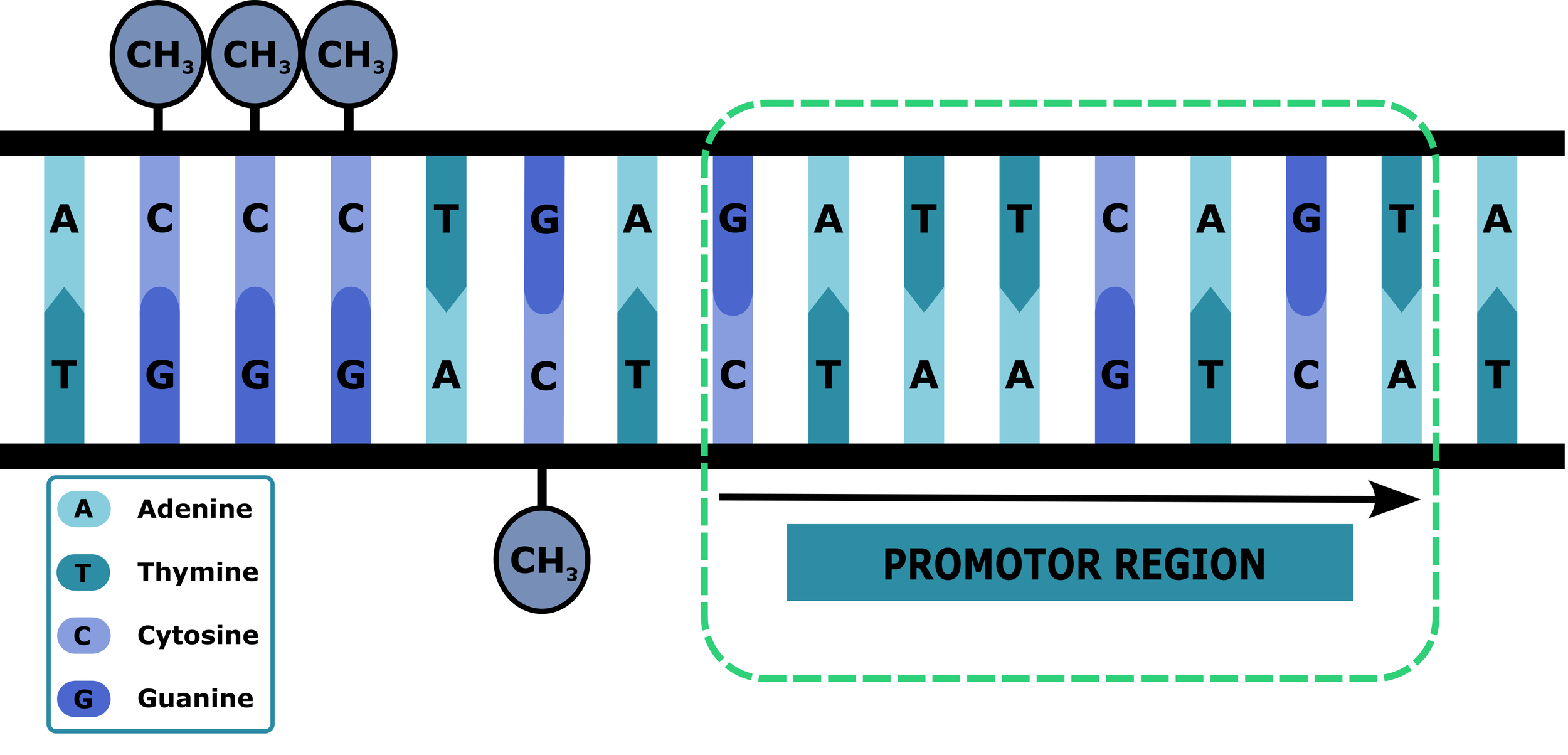
DNA methylation.
Schematic representation of a methylated DNA double strand. Methyl groups (CH₃) are attached to cytosine bases, illustrating DNA methylation at CpG sites. The highlighted promoter region indicates a regulatory region, where DNA methylation can influence gene activity. The four DNA bases, adenine (A), thymine (T), cytosine (C), and guanine (G), are colour-coded for clarity.
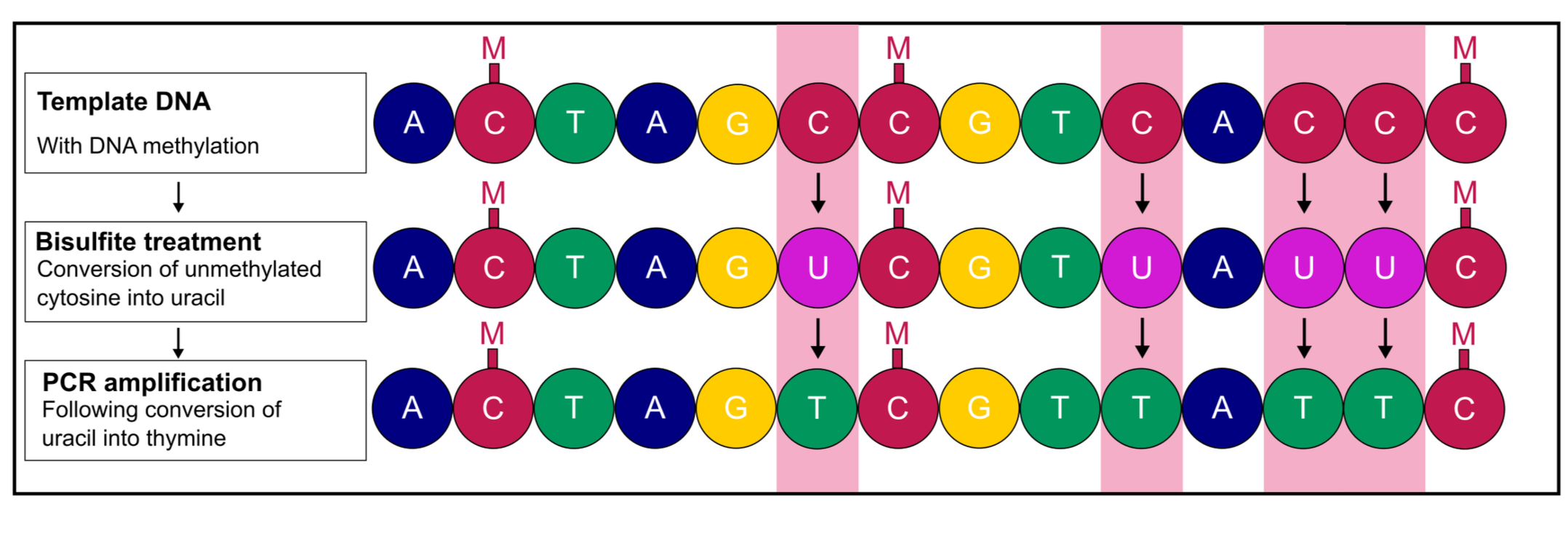
Figure1: Bisulfite conversion of DNA for methylation analysis.
The figure illustrates the principle of bisulfite treatment used in DNA methylation analysis. Methylated cytosines (C) are protected from the C → T conversion, whereas unmethylated cytosines are converted to thymine (T). Consequently, methylated cytosines remain detectable as C, while unmethylated cytosines appear as T in the amplified DNA, enabling DNA methylation patterns to be identified by sequencing.
To uncover DNA methylation patterns, a specific chemical treatment is necessary. Bisulfite treatment is used to distinguish methylated from unmethylated cytosines. During this process, unmethylated cytosines are converted into uracils, which are subsequently transformed into thymine in the following PCR. In contrast, age-informative, methylated cytosines remain unchanged, enabling the identification of age-informative CpG sites, based on the retention of cytosine bases at methylated CpG sites. These sites can then serve as molecular markers for age estimation.
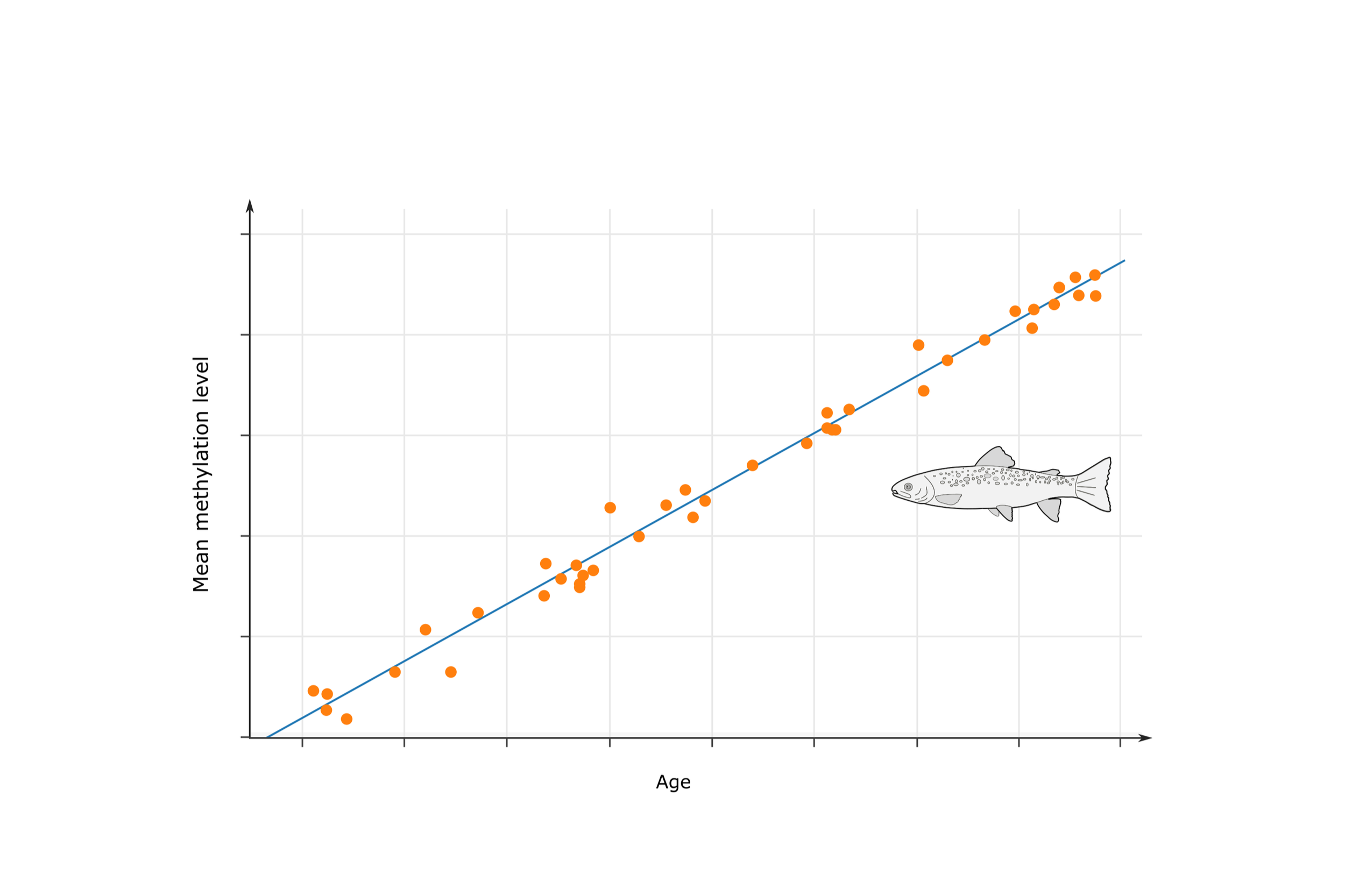
Figure: Relationship between fish age and DNA methylation.
This scatter plot illustrates the expected positive relationship between fish age and mean DNA methylation levels over time.